Who’s Really “Anti-Science”? A Conservative Perspective on the Gender Debate
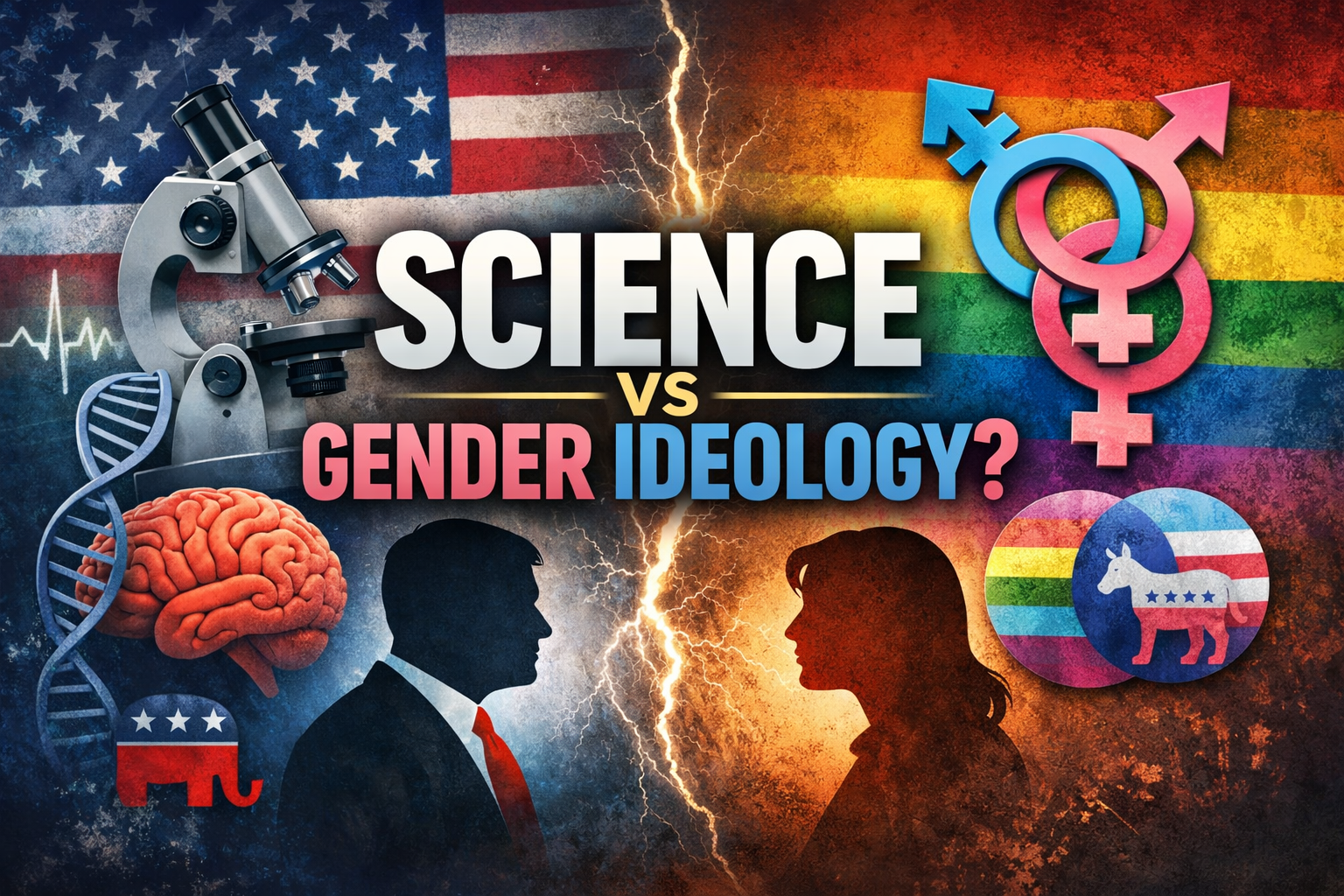
In today’s political climate, one accusation appears again and again in public discourse: that conservatives or Republicans are “anti-science.” The charge is often repeated in debates about climate change, public health, education, and social policy. Yet many conservatives argue that the label says less about science itself and more about ideological disagreement — especially when it comes to questions surrounding gender identity.
From a conservative viewpoint, the irony is hard to ignore. The same voices that accuse the political right of rejecting science frequently promote the idea that individuals can change genders, a claim conservatives believe conflicts with basic biological principles long accepted in medicine and human anatomy.
Traditionally, biological sex has been understood through observable characteristics such as chromosomes, reproductive systems, and developmental biology. Under this framework, humans are categorized as male or female based on objective physical traits. Conservatives often argue that acknowledging these biological realities is not political — it is simply recognizing scientific fact.
The modern distinction between sex and gender marks the point where disagreement begins. Many progressive thinkers and institutions describe gender as a social or psychological identity separate from biological sex. According to this view, gender exists along a spectrum and can differ from one’s physical body.
Conservatives, however, tend to see this shift as a redefinition of scientific language driven more by cultural and philosophical changes than by empirical discovery. They argue that while individuals deserve dignity and respect, redefining biological categories introduces confusion into areas where clarity matters — such as medicine, sports, education policy, and legal protections.
This disagreement fuels frustration on the right. Conservatives ask how skepticism toward certain policies or theories can be labeled “anti-science” when their position relies on longstanding biological definitions. In their eyes, questioning new social theories is consistent with the scientific method itself, which depends on inquiry, debate, and evidence rather than consensus enforced through social pressure.
Another concern often raised is the role of institutions. Universities, media organizations, and professional associations increasingly present gender identity concepts as settled science. Conservatives worry that when dissenting viewpoints are dismissed outright, science risks becoming intertwined with ideology. They argue that scientific progress historically depended on questioning prevailing assumptions, not discouraging disagreement.
Critics of the conservative position counter that scientific understanding evolves and that psychology and medical research increasingly recognize gender dysphoria as a real human experience deserving compassion and treatment. They believe affirming gender identity reflects scientific advancement and improved understanding of mental health.
The divide, then, is not simply about science versus anti-science. It is about competing interpretations of evidence, differing views on the relationship between biology and identity, and deeper philosophical questions about how society defines truth and reality.
For conservatives, the central issue is consistency. If science is to remain credible in public life, they argue, it must be applied evenly — not selectively embraced when it aligns with cultural trends and dismissed when it does not. Labeling political opponents as “anti-science” may be rhetorically effective, but it risks shutting down the very debates that scientific inquiry depends upon.
Ultimately, the gender debate reveals a broader challenge facing modern society: how to navigate disagreements where science, ethics, and personal identity intersect. A healthy democracy requires space for respectful disagreement without assuming ignorance or malice on either side.
Whether one agrees with conservative conclusions or not, many on the right believe they are not rejecting science at all — but defending what they see as its consistent application. The real question may not be who believes in science, but how science should guide public policy in a culture increasingly shaped by competing worldviews.


